
NCLEX Lab Values 2026: Normal Ranges & Critical Labs
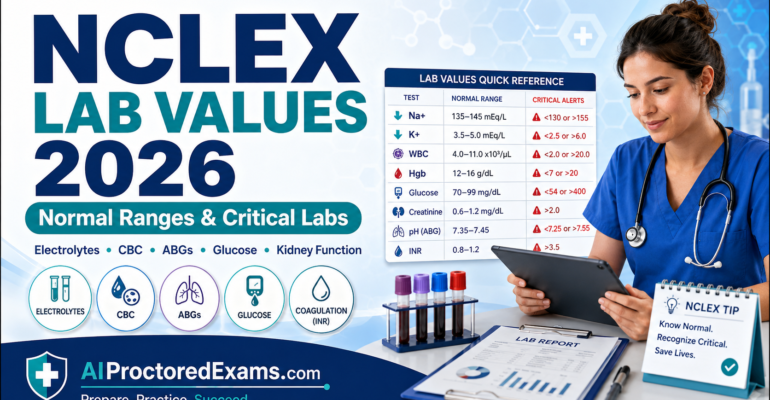

NCLEX Lab Values 2026: Normal Ranges, Critical Labs & Nursing Priorities
Laboratory values are one of the most important areas to understand when preparing for the NCLEX-RN. You may encounter electrolytes, complete blood count results, kidney-function tests, blood glucose measurements, coagulation studies, arterial blood gases, and other diagnostic findings inside medical-surgical, pharmacology, maternal-newborn, emergency, and Next Generation NCLEX (NGN) questions.
But successful NCLEX preparation is not simply about memorizing dozens of numbers.
You need to understand what an abnormal laboratory result means, which patient findings make it more significant, what medications may affect the result, and when the nurse needs to intervene.
This NCLEX Lab Values 2026 guide explains the high-yield laboratory values nursing candidates should understand, common adult reference ranges, important abnormal findings, and strategies for answering laboratory-based NCLEX questions.
For a complete review of the current examination, begin with the 2026 NCLEX-RN Study Guide.
If you are preparing on a fixed schedule, combine this resource with the 30-Day NCLEX Study Plan and the 2026 NCLEX-RN Exam Prep Course – Complete Review, Practice Questions & Rationales.
Do You Have to Memorize Lab Values for the NCLEX in 2026?
This is an important distinction.
Beginning with the Next Generation NCLEX, NCSBN states that when an NCLEX item contains a numeric laboratory value, the corresponding normal reference range is included in the item.
Therefore, you do not need to depend entirely on memorizing every exact reference range.
However, you still need to know what the results mean.
For example, knowing that potassium is below the reference range is only the beginning.
You should also understand that significant hypokalemia may affect cardiac and neuromuscular function, that certain medications can contribute to potassium loss, and that a patient with an abnormal potassium level and cardiac symptoms may require prompt attention.
The official 2026 NCLEX-RN Test Plan specifically expects candidates to compare laboratory values with normal values, monitor laboratory results, recognize changes in client condition, and intervene appropriately.
What You Should Learn Instead of Memorizing Numbers
For every important laboratory value, try to understand five things:
- What does the test measure?
- What does a high value suggest?
- What does a low value suggest?
- What symptoms or complications are dangerous?
- What should the nurse assess or do next?
That approach is much closer to the clinical judgment tested on the NCLEX.
NCLEX Lab Values Cheat Sheet
The following table provides commonly used adult reference ranges for study purposes.
Reference ranges can vary by laboratory, patient population, testing method, age, sex, and clinical situation. On actual NCLEX items containing numeric laboratory values, use the reference range supplied in the question. Common CBC and metabolic-panel ranges below are consistent with current MedlinePlus reference information.
| Laboratory Test | Common Adult Reference Range |
|---|---|
| Sodium | Approximately 135–145 mEq/L |
| Potassium | Approximately 3.5–5.1 mEq/L |
| Chloride | Approximately 96–106 mEq/L |
| Bicarbonate/CO₂ | Approximately 23–29 mEq/L |
| Calcium | Approximately 8.8–10.3 mg/dL |
| Magnesium | Approximately 1.7–2.2 mg/dL |
| Phosphorus | Approximately 2.8–4.5 mg/dL |
| BUN | Approximately 6–20 mg/dL |
| Creatinine | Approximately 0.8–1.2 mg/dL |
| Fasting glucose | Approximately 70–100 mg/dL |
| WBC | Approximately 4,500–11,000/mm³ |
| Platelets | Approximately 150,000–400,000/mm³ |
| Hemoglobin — female | Approximately 12–16 g/dL |
| Hemoglobin — male | Approximately 13–18 g/dL |
| Hematocrit — female | Approximately 36–48% |
| Hematocrit — male | Approximately 40–55% |
| PT | Approximately 11–13.5 seconds |
| INR without anticoagulation | Approximately 0.8–1.1 |
| ABG pH | 7.35–7.45 |
| PaCO₂ | 35–45 mm Hg |
| HCO₃⁻ | 22–26 mEq/L |
| PaO₂ | 75–100 mm Hg |
Do not treat this table as a substitute for clinical reasoning.
For NCLEX purposes, you need to identify which abnormal value matters most for the patient in front of you.
Electrolyte Lab Values for NCLEX
Electrolyte questions are high-yield because electrolyte disturbances can affect the cardiovascular, neurological, renal, gastrointestinal, and musculoskeletal systems.
Sodium: Na⁺
A commonly used adult reference range is approximately 135–145 mEq/L.
Sodium is closely related to fluid balance and neurological function.
Low Sodium: Hyponatremia
Hyponatremia may occur with conditions involving excessive water, sodium loss, certain medications, kidney disease, or endocrine abnormalities.
Potential manifestations include:
- Headache
- Nausea
- Confusion
- Lethargy
- Muscle weakness
- Neurological deterioration
- Seizures when severe
NCLEX Priority With Hyponatremia
The most important concern is often neurological status.
If a patient with significant hyponatremia develops increasing confusion, decreased level of consciousness, or seizure activity, this is more urgent than a patient who is mildly abnormal but clinically stable.
High Sodium: Hypernatremia
Hypernatremia frequently reflects a relative deficit of water.
Potential findings may include:
- Thirst
- Dry mucous membranes
- Restlessness
- Weakness
- Confusion
- Neurological changes
For NCLEX questions, connect the sodium result with the patient’s hydration status and neurological assessment.
Potassium: K⁺
A commonly used adult reference range is approximately 3.5–5.1 mEq/L, although laboratory ranges vary.
Potassium deserves special attention because disturbances can affect cardiac rhythm and muscle function.
Low Potassium: Hypokalemia
Possible causes include:
- Diuretic therapy
- Gastrointestinal losses
- Vomiting
- Diarrhea
- Inadequate intake
- Certain endocrine conditions
Possible findings include:
- Weakness
- Fatigue
- Muscle cramps
- Decreased gastrointestinal motility
- Cardiac rhythm abnormalities
High Potassium: Hyperkalemia
Hyperkalemia can occur with:
- Kidney dysfunction
- Certain medications
- Tissue destruction
- Acid-base disturbances
- Excess potassium administration
NCLEX Priority With Potassium Abnormalities
Whenever you see a substantially abnormal potassium value, look for:
- Cardiac symptoms
- ECG changes
- Muscle weakness
- Renal dysfunction
- Potassium-altering medications
A patient with an abnormal potassium level and evidence of cardiac instability should receive greater priority than a stable patient with a mild laboratory abnormality.
Calcium: Ca²⁺
A commonly used total calcium range is approximately 8.8–10.3 mg/dL.
Calcium is important in:
- Neuromuscular function
- Bone health
- Cardiac function
- Blood clotting
Low Calcium: Hypocalcemia
Possible manifestations include:
- Tingling
- Numbness
- Muscle cramps
- Tetany
- Increased neuromuscular excitability
- Seizures in severe cases
High Calcium: Hypercalcemia
Possible manifestations include:
- Weakness
- Fatigue
- Constipation
- Changes in mental status
- Cardiac changes
NCLEX Strategy
Do not simply identify calcium as high or low.
Ask whether the patient is showing neurological, muscular, or cardiac complications.
Magnesium: Mg²⁺
A commonly used serum magnesium reference range is approximately 1.7–2.2 mg/dL.
Magnesium disturbances can affect:
- Cardiac rhythm
- Neuromuscular activity
- Seizure risk
- Other electrolyte levels
Low Magnesium
Possible findings include:
- Tremors
- Muscle cramps
- Weakness
- Arrhythmias
- Seizures when severe
MedlinePlus identifies muscle cramps, numbness or tingling, irregular heart rhythm, weakness, and seizures among possible manifestations of low magnesium.
NCLEX Connection: Maternal Nursing
Magnesium is also important in maternal-newborn nursing because magnesium-containing therapies may appear in questions involving pregnancy complications.
In these questions, focus on:
- Respiratory status
- Neurological assessment
- Reflexes
- Urinary output
- Medication safety
Do not rely on a single laboratory result when the patient’s clinical assessment shows deterioration.
Phosphorus
A commonly used adult reference range is approximately 2.8–4.5 mg/dL.
Phosphorus works closely with calcium and is important in bone, energy, and cellular function.
For NCLEX preparation, understand its relationship with:
- Kidney disease
- Nutrition
- Calcium balance
- Parathyroid function
Complete Blood Count Values for NCLEX
A CBC contains several frequently tested measurements.
Typical adult values vary, but MedlinePlus lists a WBC range of approximately 4,500–11,000 cells/mcL, platelets around 150,000–400,000, and sex-specific hemoglobin and hematocrit ranges.
White Blood Cell Count
A common adult WBC reference range is approximately:
4,500–11,000 cells/mm³
High WBC
An elevated WBC count may occur in situations involving:
- Infection
- Inflammation
- Physiological stress
- Certain medications or disorders
Low WBC
A low WBC may increase concern about the patient’s ability to fight infection.
This becomes especially important in patients receiving therapies that suppress bone marrow function.
NCLEX Priority
Do not assess WBC in isolation.
Ask:
Does the patient have a fever?
Are there signs of infection?
Is the patient immunocompromised?
Are infection-prevention precautions especially important?
A severely immunocompromised patient with signs of infection may require rapid intervention.
Hemoglobin
Common adult hemoglobin ranges are approximately:
Female: 12–16 g/dL
Male: 13–18 g/dL
Hemoglobin is important because it is involved in oxygen transport.
Low Hemoglobin
Possible concerns include:
- Anemia
- Blood loss
- Reduced oxygen-carrying capacity
NCLEX Priority
A hemoglobin value becomes much more significant when combined with:
- Active bleeding
- Tachycardia
- Hypotension
- Shortness of breath
- Chest pain
- Dizziness
- Postoperative deterioration
The question is rarely just:
“Is the hemoglobin low?”
A better clinical question is:
“What is happening to this patient because the hemoglobin is low?”
Hematocrit
Common adult ranges are approximately:
Female: 36–48%
Male: 40–55%
Hematocrit represents the percentage of blood composed of red blood cells.
Hematocrit may be affected by:
- Blood loss
- Anemia
- Hydration status
- Dehydration
NCLEX Tip
Look for trends.
A postoperative patient’s falling hemoglobin and hematocrit accompanied by tachycardia and hypotension is more clinically meaningful than an isolated slightly low value.
Platelet Count
A commonly used platelet reference range is approximately:
150,000–400,000/mm³.
Platelets are important for clot formation.
Low Platelet Count
Thrombocytopenia increases concern about bleeding.
Assess for:
- Petechiae
- Bruising
- Bleeding gums
- Hematuria
- Gastrointestinal bleeding
- Neurological changes that could indicate serious bleeding
NCLEX Priority
If platelets are significantly decreased, be cautious about procedures or medications that increase bleeding risk.
The exact nursing response depends on the patient situation and orders given.
Kidney Function Tests for NCLEX
Kidney-function questions frequently appear alongside:
- Electrolyte abnormalities
- Medication administration
- Fluid balance
- Dialysis
- Acute kidney injury
- Chronic kidney disease
Blood Urea Nitrogen: BUN
A commonly cited range is approximately:
6–20 mg/dL.
BUN can be affected by multiple factors including kidney function and hydration.
NCLEX Strategy
Do not automatically interpret an elevated BUN as kidney failure.
Look at:
- Creatinine
- Urinary output
- Hydration
- Patient history
- Current medications
- Clinical condition
Creatinine
A commonly used adult reference range is approximately:
0.8–1.2 mg/dL, although ranges vary.
Creatinine is particularly useful when evaluating kidney function.
NCLEX Medication Connection
Kidney function matters because some medications require special consideration in patients with impaired renal function.
The 2026 NCLEX-RN Test Plan specifically expects nurses to review relevant laboratory data before medication administration.
When a question gives you:
- A medication order;
- A rising creatinine;
- Reduced urinary output; and
- A patient with kidney impairment,
those pieces of information are probably related.
Blood Glucose Values for NCLEX
Glucose is important in:
- Diabetes
- Endocrine nursing
- Emergency care
- Neurological assessment
- Medication administration
- Nutrition
A fasting glucose around 70–100 mg/dL is commonly used as a reference range, although exact laboratory ranges vary.
Hypoglycemia
Hypoglycemia can cause:
- Sweating
- Tremors
- Hunger
- Confusion
- Weakness
- Behavioral changes
- Decreased consciousness
- Seizures in severe cases
NCLEX Priority
Hypoglycemia may become an immediate safety issue because the brain depends on glucose.
If a conscious patient has evidence of hypoglycemia, the question may focus on rapid correction according to the clinical situation and available orders.
If the patient cannot safely swallow, the intervention strategy changes.
Always assess the patient’s level of consciousness and ability to protect the airway.
Hyperglycemia
Hyperglycemia may occur with:
- Diabetes
- Acute illness
- Stress
- Medications
- Endocrine conditions
The significance depends on the patient’s overall presentation.
A high glucose accompanied by dehydration, abnormal breathing, altered mental status, or other signs of metabolic decompensation is more urgent than an isolated mild elevation.
Hemoglobin A1C
A1C provides information about average blood glucose over approximately the previous several months.
Common diagnostic categories are:
- Normal: below 5.7%
- Prediabetes: 5.7–6.4%
- Diabetes: 6.5% or above
These are diagnostic guide ranges; individual treatment targets can differ.
For NCLEX questions, distinguish between:
A1C → longer-term glucose control
and
Blood glucose → current glucose status
Coagulation Lab Values for NCLEX
Coagulation studies frequently appear with:
- Anticoagulant therapy
- Bleeding
- Surgery
- Liver disease
- Clotting disorders
Prothrombin Time: PT
A commonly used normal PT range is approximately:
11–13.5 seconds.
International Normalized Ratio: INR
For an individual not taking anticoagulation, a commonly used INR range is approximately:
0.8–1.1.
For many patients receiving warfarin, a target around 2.0–3.0 may be used, depending on the condition and provider-prescribed target. Some clinical situations require different targets.
NCLEX Priority With Elevated INR
An elevated anticoagulation result becomes especially concerning when accompanied by:
- Active bleeding
- Falls or trauma
- Neurological changes
- Black or bloody stools
- Hematuria
- Significant bruising
- Recent invasive procedures
Always interpret the laboratory value in relation to the patient.
Partial Thromboplastin Time: PTT/aPTT
PTT is another coagulation study.
Reference ranges and therapeutic targets may vary by laboratory, assay, medication, and institutional protocol.
For NCLEX questions, use the reference range and target supplied in the item.
The important nursing principle is to recognize whether anticoagulation is below, within, or above the ordered therapeutic target and whether the patient shows evidence of bleeding or clotting.
Arterial Blood Gas Values for NCLEX
ABG questions can initially appear complicated, but a systematic approach makes them much easier.
Common reference ranges include:
| ABG Component | Common Range |
|---|---|
| pH | 7.35–7.45 |
| PaCO₂ | 35–45 mm Hg |
| HCO₃⁻ | 22–26 mEq/L |
| PaO₂ | 75–100 mm Hg |
These ranges are consistent with current clinical references, although laboratories can vary.
Step 1: Look at the pH
pH Below 7.35
Think:
Acidosis
pH Above 7.45
Think:
Alkalosis
Step 2: Look at PaCO₂
PaCO₂ represents the respiratory component.
A higher carbon dioxide level tends toward respiratory acidosis.
A lower carbon dioxide level tends toward respiratory alkalosis.
Step 3: Look at HCO₃⁻
Bicarbonate represents the metabolic component.
A lower bicarbonate level tends toward metabolic acidosis.
A higher bicarbonate level tends toward metabolic alkalosis.
NCLEX ABG Examples
Example 1
pH: 7.29
PaCO₂: 52 mm Hg
HCO₃⁻: 24 mEq/L
The pH indicates acidosis.
The PaCO₂ is elevated.
The bicarbonate is within the expected range.
The pattern is consistent with respiratory acidosis.
Example 2
pH: 7.48
PaCO₂: 32 mm Hg
HCO₃⁻: 24 mEq/L
The pH indicates alkalosis.
The PaCO₂ is decreased.
The bicarbonate remains within the expected range.
The pattern is consistent with respiratory alkalosis.
Example 3
pH: 7.28
PaCO₂: 40 mm Hg
HCO₃⁻: 18 mEq/L
The pH indicates acidosis.
PaCO₂ is within the expected range.
HCO₃⁻ is decreased.
The pattern is consistent with metabolic acidosis.
Example 4
pH: 7.48
PaCO₂: 40 mm Hg
HCO₃⁻: 30 mEq/L
The pH indicates alkalosis.
PaCO₂ is within the expected range.
HCO₃⁻ is elevated.
The pattern is consistent with metabolic alkalosis.
ABG Priority Strategy
After identifying the acid-base disorder, return to the patient.
Ask:
Why is this happening?
Could the patient be hypoventilating?
Is there respiratory failure?
Is the patient vomiting?
Could this be related to severe metabolic illness?
Is oxygenation compromised?
Do not allow the ABG calculation to distract you from patient deterioration.
Liver-Related Laboratory Tests for NCLEX
Liver-related laboratory tests may appear in questions involving:
- Liver disease
- Medication safety
- Bleeding
- Nutrition
- Jaundice
- Alcohol-related disorders
- Hepatic complications
Common liver panels may include:
- ALT
- AST
- ALP
- Bilirubin
- Albumin
- Total protein
MedlinePlus identifies albumin, total protein, ALT, AST, ALP and related markers among commonly used liver-function tests.
For NCLEX purposes, you do not need to memorize every possible liver-enzyme range.
Focus on what an abnormal result means in context.
Albumin
Albumin is produced by the liver.
Low albumin can occur in clinical situations involving liver disease, kidney disease, or inadequate nutrition, while elevated albumin can be associated with dehydration.
NCLEX Connection
Low albumin may be relevant when considering:
- Nutrition
- Edema
- Fluid distribution
- Liver function
- Kidney disease
- Wound healing
Laboratory Values and Medication Administration
One of the highest-yield NCLEX strategies is learning which laboratory results matter before administering certain medications.
The current NCLEX-RN blueprint specifically includes reviewing laboratory results, contraindications, allergies, and interactions before medication administration.
Ask These Questions Before Giving a Medication
Does the Medication Affect Potassium?
If yes, check potassium and kidney status where relevant.
Does the Medication Increase Bleeding Risk?
Look at:
- Platelets
- PT/INR or relevant ordered coagulation monitoring
- Signs of bleeding
Is the Medication Cleared Through the Kidneys?
Review:
- Creatinine
- Renal function
- Urinary output
- Ordered parameters
Does the Medication Affect Blood Glucose?
Check glucose when clinically indicated and review signs of hypoglycemia or hyperglycemia.
Does the Medication Suppress Bone Marrow?
Review:
- WBC
- Hemoglobin
- Platelets
Learning these relationships is much more useful than memorizing disconnected laboratory numbers.
How to Answer NCLEX Questions With Multiple Abnormal Lab Values
NGN and traditional NCLEX questions may present several results simultaneously.
Not every abnormal value requires immediate action.
Use the following method.
Step 1: Identify Every Abnormal Result
Compare each value with the reference range provided.
Step 2: Look for the Most Dangerous Abnormality
Ask:
Which abnormality could cause immediate harm?
Step 3: Look at the Patient
Laboratory values do not exist independently.
Consider:
- Vital signs
- Level of consciousness
- Cardiac rhythm
- Respiratory status
- Bleeding
- Urinary output
- Medications
- Recent procedures
- Diagnosis
Step 4: Look for Trends
A rapidly worsening value may be more important than one that is chronically abnormal and stable.
The 2026 NCLEX-RN Test Plan specifically emphasizes recognizing trends and changes in client condition.
Step 5: Determine the Safest Nursing Action
Possible actions may include:
- Performing further assessment
- Holding an intervention when appropriate under the scenario
- Implementing a prescribed safety measure
- Reporting a significant result
- Monitoring the patient closely
- Preparing for an intervention
- Addressing an immediate life-threatening complication
Choose the action supported by the complete patient scenario.
10 NCLEX Lab Value Practice Questions
The following questions are original educational questions and are not recalled or confidential NCLEX examination items.
Question 1: Potassium
A nurse reviews laboratory results for four patients. Which patient should the nurse assess first?
A. Potassium 4.1 mEq/L with no symptoms
B. Potassium 2.9 mEq/L with new cardiac rhythm changes
C. Sodium 134 mEq/L with no neurological symptoms
D. Glucose 108 mg/dL after breakfast
Correct Answer: B
Rationale
The patient has a significantly decreased potassium level accompanied by a cardiac change. The combination of an abnormal laboratory result and evidence of physiological instability makes this patient the priority.
Question 2: Platelets
A patient’s platelet count has decreased significantly. Which assessment is most important?
A. Bowel sounds
B. Signs of bleeding
C. Hearing ability
D. Appetite
Correct Answer: B
Rationale
Platelets are important for clot formation. A significantly decreased platelet count increases concern for bleeding.
Question 3: Hemoglobin
A postoperative patient has a decreasing hemoglobin level. Which additional finding is most concerning?
A. Mild incisional discomfort
B. Heart rate of 122/min with hypotension
C. Request for water
D. Difficulty sleeping
Correct Answer: B
Rationale
A falling hemoglobin combined with tachycardia and hypotension may indicate significant blood loss or impaired perfusion and requires prompt evaluation.
Question 4: Sodium
Which finding in a patient with severe hyponatremia requires immediate attention?
A. Mild thirst
B. Constipation
C. New seizure activity
D. Request for assistance walking
Correct Answer: C
Rationale
Severe sodium disturbances can produce serious neurological complications. New seizure activity represents an immediate safety concern.
Question 5: Creatinine
Before administering a medication for which kidney function is clinically relevant, which laboratory result would be important for the nurse to review?
A. Creatinine
B. Hematocrit only
C. WBC only
D. Platelet count only
Correct Answer: A
Rationale
Creatinine provides important information about kidney function and may influence medication safety in situations involving renal clearance.
Question 6: Hypoglycemia
A conscious patient with diabetes becomes shaky, sweaty, and confused. What should the nurse suspect first?
A. Hypoglycemia
B. Hypercalcemia
C. Elevated platelet count
D. High hematocrit
Correct Answer: A
Rationale
Shakiness, sweating and confusion are consistent with possible hypoglycemia. The nurse should assess glucose promptly and follow the appropriate treatment plan.
Question 7: ABG
A patient has:
pH 7.30
PaCO₂ 52 mm Hg
HCO₃⁻ 24 mEq/L
Which acid-base disorder is most consistent with these results?
A. Respiratory acidosis
B. Respiratory alkalosis
C. Metabolic acidosis
D. Metabolic alkalosis
Correct Answer: A
Rationale
The pH indicates acidosis and the elevated PaCO₂ points to a respiratory cause.
Question 8: INR
A patient receiving anticoagulant therapy has an elevated INR and reports black stools. What is the nurse’s priority concern?
A. Dehydration
B. Bleeding
C. Hyperglycemia
D. Respiratory alkalosis
Correct Answer: B
Rationale
An elevated anticoagulation result combined with black stools raises concern for gastrointestinal bleeding.
Question 9: Magnesium
Which finding is most concerning in a patient with a significant magnesium abnormality?
A. Request for a different meal
B. Cardiac rhythm disturbance
C. Mild boredom
D. Preference to sleep later
Correct Answer: B
Rationale
Magnesium abnormalities can affect cardiac and neuromuscular function. Cardiac instability deserves priority attention.
Question 10: Clinical Judgment
A nurse sees several abnormal laboratory results in an NGN case study. What should the nurse do first when determining priority?
A. Choose the value farthest numerically from zero
B. Memorize the laboratory range
C. Connect the abnormal values with the patient’s assessment and current condition
D. Automatically notify the provider about every abnormal result before assessing the patient
Correct Answer: C
Rationale
Clinical judgment requires integrating laboratory findings with the patient’s presentation. An abnormal value becomes clinically meaningful when interpreted in context.
Best Way to Study NCLEX Lab Values
Do Not Memorize a Giant Chart Alone
A chart can be useful for initial familiarity, but it should not be your entire strategy.
Instead, organize laboratory values into systems.
Electrolytes
Study:
- Sodium
- Potassium
- Calcium
- Magnesium
- Phosphorus
Hematology
Study:
- WBC
- Hemoglobin
- Hematocrit
- Platelets
Kidney Function
Study:
- BUN
- Creatinine
- Electrolytes
- Urinary output
Coagulation
Study:
- PT
- INR
- PTT/aPTT concepts
- Platelets
Endocrine
Study:
- Glucose
- A1C
Respiratory and Acid-Base
Study:
- pH
- PaCO₂
- HCO₃⁻
- PaO₂
Then connect each group to common patient problems.
Use Lab Values in Your 30-Day NCLEX Study Plan
If you are following the 30-Day NCLEX Study Plan, integrate laboratory values throughout the month rather than studying them once.
For example:
Cardiovascular Day
Review:
- Potassium
- Magnesium
- Hemoglobin
- Coagulation studies
Renal Day
Review:
- BUN
- Creatinine
- Potassium
- Sodium
- Calcium
- Phosphorus
Endocrine Day
Review:
- Glucose
- A1C
- Sodium
- Potassium
Respiratory Day
Review:
- ABGs
- PaO₂
- PaCO₂
Pharmacology Day
Review laboratory tests relevant to medication safety.
This spaced approach makes laboratory interpretation part of your nursing reasoning.
Frequently Asked Questions About NCLEX Lab Values
Does NCLEX Give You Normal Lab Values?
Yes.
NCSBN states that beginning with the Next Generation NCLEX, items containing a numeric laboratory value include the corresponding normal reference range.
You should still understand how to interpret the result and determine its nursing significance.
Should I Memorize NCLEX Lab Values?
You should become familiar with common laboratory values, but do not spend your entire preparation period memorizing exact numbers.
The better approach is to understand:
- High versus low
- Clinical significance
- Symptoms
- Trends
- Medication relationships
- Nursing priorities
What Lab Values Are Most Important for NCLEX?
High-yield categories include:
- Electrolytes
- CBC
- Kidney function
- Glucose
- Coagulation
- ABGs
Other laboratory findings may also appear depending on the patient scenario.
Is Potassium Important for NCLEX?
Yes.
Potassium is particularly important because significant abnormalities may affect cardiac and neuromuscular function.
Always connect potassium abnormalities with the patient’s cardiac status, kidney function, medications, and symptoms.
Do I Need to Know ABGs for NCLEX?
Candidates should understand the basic principles of acid-base interpretation and recognize abnormal respiratory and metabolic patterns.
The most important step after interpreting an ABG is determining what the result means for the patient’s current condition.
Are Lab Values Part of NGN Questions?
They can be.
NGN case studies may present multiple sources of clinical information, including laboratory findings, vital signs, medication information, assessment findings, and other patient data.
Use laboratory results as clinical cues rather than treating them as isolated numbers.
Final NCLEX Lab Values Study Checklist
Before taking the NCLEX-RN, make sure you can:
- Recognize major electrolyte abnormalities
- Explain the significance of abnormal potassium
- Recognize neurological complications of sodium disorders
- Connect calcium and magnesium abnormalities with neuromuscular and cardiac findings
- Interpret basic CBC results
- Recognize bleeding risk associated with low platelets
- Connect hemoglobin changes with bleeding and oxygenation
- Interpret BUN and creatinine in clinical context
- Recognize hypoglycemia
- Understand A1C versus current glucose
- Interpret PT and INR conceptually
- Recognize anticoagulation-related bleeding
- Interpret basic ABGs
- Distinguish respiratory from metabolic disorders
- Review laboratory data before relevant medication administration
- Identify worsening laboratory trends
- Connect abnormal laboratory findings with patient symptoms
- Prioritize the patient rather than the number
Master NCLEX Lab Values Through Clinical Judgment
The goal of studying laboratory values for NCLEX is not to become a walking laboratory-reference manual.
It is to develop nursing judgment.
When you see an abnormal laboratory value, ask:
What does this mean?
What patient complication could occur?
What assessment finding would worry me?
Is this result getting better or worse?
Does this result affect medication safety?
Which patient needs attention first?
That is the type of thinking that turns laboratory knowledge into NCLEX success.
For your complete preparation strategy, continue with the 2026 NCLEX-RN Study Guide.
If your examination is approaching, follow the 30-Day NCLEX Study Plan.
For comprehensive content review, clinical judgment practice, NCLEX-style questions, and detailed rationales, explore the 2026 NCLEX-RN Exam Prep Course.
You can also:
- Browse NCLEX-RN Courses
- Explore AIProctoredExams Study Guides
- Browse All Exam Prep Courses
- Learn How AIProctoredExams Works
Understand the result. Recognize the risk. Prioritize the patient. Apply clinical judgment.
Educational Disclaimer
AIProctoredExams is an independent educational exam-preparation platform and is not affiliated with or endorsed by NCSBN, NCLEX, Pearson VUE, or any nursing regulatory body. NCLEX® and NCLEX-RN® are registered trademarks of the National Council of State Boards of Nursing, Inc. Laboratory reference ranges can differ between laboratories, populations, testing methods, and clinical situations. The ranges presented here are educational examples and should not be used for diagnosing or treating patients. On NCLEX questions, candidates should use the reference information provided in the examination item.