NCLEX Pharmacology 2026: Drug Classes, Side Effects & Nursing Tips
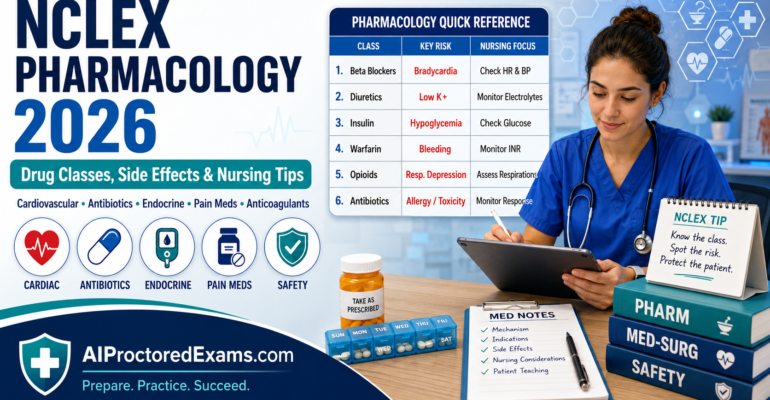

NCLEX Pharmacology 2026: Must-Know Drug Classes, Side Effects & Nursing Considerations
Pharmacology is one of the most important areas to master when preparing for the NCLEX-RN. You need to understand not only what medications do, but also how nurses administer them safely, what assessments should be completed before administration, which laboratory values matter, what adverse effects require immediate intervention, and what patient teaching is essential.
The 2026 NCLEX-RN Test Plan assigns approximately 13–19% of exam content to Pharmacological and Parenteral Therapies. The official blueprint includes safe medication administration, dosage calculations, medication reconciliation, blood products, intravenous therapy, adverse effects, contraindications, interactions, laboratory monitoring, patient education, and evaluation of medication response.
This NCLEX Pharmacology 2026 study guide organizes medications into major drug classes so you can learn pharmacology systematically instead of attempting to memorize hundreds of unrelated drug names.
For complete exam preparation, begin with the 2026 NCLEX-RN Study Guide.
You can also use the 30-Day NCLEX Study Plan to organize your preparation and review the NCLEX Lab Values 2026 Guide to strengthen the connection between medications and laboratory monitoring.
For comprehensive lessons, practice questions, clinical judgment exercises, and detailed rationales, explore the 2026 NCLEX-RN Exam Prep Course. The existing AIProctoredExams NCLEX course includes medication safety, adverse effects, interactions, IV therapy, dosage calculations, laboratory interpretation, and pharmacology practice.
How Much Pharmacology Is on the NCLEX-RN in 2026?
According to the official 2026 NCLEX-RN Test Plan, Pharmacological and Parenteral Therapies accounts for approximately 13–19% of examination content.
That does not mean every pharmacology question will simply ask:
What is this medication used for?
Pharmacology can be integrated into questions about:
- Patient safety
- Clinical judgment
- Laboratory values
- Delegation
- Prioritization
- Medical-surgical nursing
- Maternal-newborn nursing
- Pediatrics
- Mental health
- Emergency nursing
- Patient education
- IV therapy
- Blood administration
For example, an NCLEX question may give you a medication, a potassium result, a blood pressure, and a new patient symptom and ask which nursing action is most appropriate.
The medication name is only one part of the question.
Do You Need to Memorize Every Medication for NCLEX?
No.
Trying to memorize hundreds or thousands of individual medications is inefficient.
A stronger strategy is to learn medications by drug class.
For each class, understand:
- The main therapeutic purpose.
- Common medication examples.
- Important adverse effects.
- What nurses assess before administration.
- Relevant laboratory values.
- Significant interactions or contraindications.
- Essential patient teaching.
- Findings requiring immediate intervention.
This creates transferable knowledge.
If you understand how beta blockers generally affect heart rate and blood pressure, for example, you are better prepared to reason through an unfamiliar beta blocker than if you memorized one isolated medication.
The NCLEX Pharmacology Framework
Use this framework whenever you study a medication.
What Is the Drug For?
Identify the major therapeutic purpose.
Examples might include:
- Lowering blood pressure
- Treating infection
- Controlling blood glucose
- Reducing pain
- Preventing blood clots
- Treating seizures
What Should the Nurse Check First?
Depending on the medication, this could include:
- Blood pressure
- Heart rate
- Respiratory rate
- Blood glucose
- Potassium
- Kidney function
- Coagulation studies
- Allergies
- Pregnancy status
- Medication interactions
What Could Seriously Harm the Patient?
Focus on significant adverse effects.
Examples include:
- Respiratory depression
- Severe bleeding
- Hypoglycemia
- Dangerous arrhythmias
- Severe allergic reactions
- Kidney injury
- Hepatic injury
- Severe electrolyte disturbances
What Should the Patient Know?
Teaching may involve:
- When to take the medication
- Whether to take it with food
- Which adverse effects to report
- Safety precautions
- Monitoring requirements
- Whether the medication should be stopped abruptly
Medication Safety: One of the Most Important NCLEX Pharmacology Themes
NCLEX pharmacology is fundamentally about safe nursing practice.
The FDA defines medication errors as preventable events that may cause or contribute to inappropriate medication use or patient harm.
The FDA also identifies several medication groups as high-alert because errors involving these drugs can cause significant patient harm. Examples include insulin, anticoagulants, opioids, antiarrhythmics, anesthetic agents, and neuromuscular blocking agents.
Before Administering a Medication, Think:
Right patient
Right medication
Right dose
Right route
Right time
Then go further.
Check:
- Allergies
- Relevant vital signs
- Laboratory values
- Medication interactions
- Contraindications
- Patient condition
- Appropriate indication
- Ability to swallow when relevant
- IV compatibility when applicable
For current FDA-approved medication information, students can consult FDA Drug Information and FDA Drug Safety Information. The FDA maintains current safety communications, labeling information, and drug databases.
Cardiovascular Medications for NCLEX
Cardiovascular pharmacology is particularly important because many cardiovascular drugs affect blood pressure, heart rate, fluid balance, electrolytes, and perfusion.
ACE Inhibitors
Examples include:
- Lisinopril
- Enalapril
- Captopril
- Ramipril
ACE inhibitors are commonly used in conditions such as hypertension and heart failure.
Lisinopril, for example, is classified as an ACE inhibitor and is used for hypertension and as part of treatment for heart failure.
Important NCLEX Considerations
Monitor:
- Blood pressure
- Kidney function
- Potassium
- Signs of adverse reactions
A persistent cough is a commonly recognized effect associated with ACE inhibitor therapy; MedlinePlus lists cough among possible effects of lisinopril-containing therapy.
NCLEX Connection
When an ACE inhibitor appears in a question, look at:
Blood pressure + potassium + kidney function + patient symptoms.
Those details may be more important than remembering the medication’s brand name.
Angiotensin Receptor Blockers
ARBs are used for cardiovascular conditions including hypertension and may appear as alternatives in certain clinical situations.
Examples include:
- Losartan
- Valsartan
For NCLEX preparation, connect ARBs with:
- Blood pressure
- Potassium
- Kidney function
- Patient teaching
Avoid treating ACE inhibitors and ARBs as completely unrelated groups; both interact with the renin-angiotensin-aldosterone system and require thoughtful patient monitoring.
Beta Blockers
Common examples include:
- Metoprolol
- Atenolol
- Propranolol
- Carvedilol
Beta blockers are used for several cardiovascular conditions.
Carvedilol, for example, is used for heart failure and hypertension and works partly by slowing heart rate.
Important NCLEX Assessments
Before administration, questions may expect you to consider:
- Heart rate
- Blood pressure
- Cardiac rhythm
- Symptoms of poor perfusion
- Respiratory history when relevant
Some beta blockers can produce or worsen bradycardia. MedlinePlus information for several beta blockers highlights slow or irregular heart rate among important concerns.
NCLEX Test Tip
If a patient is prescribed a medication that lowers heart rate and the question gives you a significantly abnormal pulse, that data is likely there for a reason.
Do not ignore vital signs.
Calcium Channel Blockers
Examples include:
- Amlodipine
- Diltiazem
- Verapamil
Calcium channel blockers may be used for hypertension, angina, and certain rhythm-related conditions depending on the medication.
Diltiazem relaxes blood vessels and is used for hypertension and angina.
NCLEX Nursing Considerations
Depending on the specific medication, monitor:
- Blood pressure
- Heart rate
- Dizziness
- Edema
- Cardiac rhythm
Always identify the specific calcium channel blocker in the question rather than assuming every drug in the class behaves identically.
Loop Diuretics
The classic NCLEX example is:
Furosemide
Furosemide is a loop diuretic used for conditions involving hypertension and edema. It increases elimination of water and salt through the kidneys.
Important NCLEX Assessments
Monitor:
- Blood pressure
- Fluid status
- Intake and output
- Daily weight
- Electrolytes
- Kidney function
High-Yield Connection: Potassium
Certain diuretics can contribute to potassium loss.
The NCLEX Lab Values Guide explains how potassium abnormalities can affect cardiac and neuromuscular function.
MedlinePlus notes that some diuretics can contribute to potassium loss.
NCLEX Strategy
If a question gives you:
- Furosemide
- Muscle weakness
- An abnormal potassium result
- Cardiac changes
connect those cues.
Do not analyze them separately.
Potassium-Sparing Diuretics
A common example is:
Spironolactone
Unlike potassium-losing diuretics, spironolactone reduces potassium loss while increasing elimination of water and sodium.
NCLEX Priority
Think about the possibility of increased potassium rather than assuming that every diuretic causes hypokalemia.
This is exactly why learning medications by class is valuable.
Digoxin
Digoxin may be used in heart failure and certain abnormal heart rhythms and helps control heart rate.
NCLEX Considerations
Questions may focus on:
- Heart rate
- Rhythm
- Signs of toxicity
- Electrolytes
- Kidney function
- Patient teaching
When digoxin appears alongside abnormal potassium, kidney impairment, or new gastrointestinal or cardiac symptoms, carefully analyze the connection before selecting an answer.
Antiarrhythmic Medications
A commonly recognized example is:
Amiodarone
Amiodarone is associated with potentially serious pulmonary, hepatic, cardiac-rhythm, and thyroid-related concerns. MedlinePlus also warns that low potassium or magnesium can increase arrhythmia-related concerns.
NCLEX Strategy
When studying antiarrhythmics, focus on:
- Cardiac rhythm
- Heart rate
- Electrolytes
- New respiratory symptoms
- Appropriate monitoring
Antiarrhythmics are among the medication groups the FDA identifies as high-alert.
Anticoagulants and Antiplatelet Medications
These are high-yield because the major safety concern is usually bleeding.
Warfarin
Warfarin is an anticoagulant that requires careful monitoring.
MedlinePlus warns that warfarin can cause serious bleeding.
NCLEX Nursing Considerations
Monitor:
- PT/INR as ordered
- Signs of bleeding
- Bruising
- Hematuria
- Black or bloody stool
- Neurological changes
- Drug interactions
Patient Teaching
Patients should understand the importance of:
- Taking the medication exactly as prescribed
- Keeping laboratory appointments
- Reporting abnormal bleeding
- Informing providers about medication use before procedures
- Discussing new medications and supplements with their health care team
Review coagulation values in the NCLEX Lab Values 2026 Guide.
Heparin and Low-Molecular-Weight Heparins
A common example is:
Enoxaparin
MedlinePlus identifies unusual bleeding, bruising, black or bloody stools, and blood in the urine among serious findings associated with enoxaparin.
NCLEX Priority
If an anticoagulated patient develops evidence of active bleeding, that finding deserves immediate attention.
Remember:
Anticoagulant + bleeding symptoms = safety problem.
Antiplatelet Medications
Examples include:
- Aspirin
- Clopidogrel
These drugs reduce platelet activity.
For NCLEX preparation, focus on:
- Bleeding
- Bruising
- GI symptoms
- Procedures
- Interaction with other medications that increase bleeding risk
Endocrine Medications for NCLEX
Insulin
Insulin is among the FDA’s recognized high-alert medication categories.
The most important NCLEX safety issue with insulin is often hypoglycemia.
MedlinePlus states that insulin overdose can cause hypoglycemia and potentially severe effects including loss of consciousness and seizures.
Signs of Hypoglycemia
Be familiar with findings such as:
- Sweating
- Tremors
- Hunger
- Confusion
- Behavioral change
- Weakness
- Reduced level of consciousness
Before Administering Insulin
Depending on the scenario, consider:
- Blood glucose
- Meal timing
- Type of insulin
- Dose
- Patient ability to eat
- Signs of hypoglycemia
NCLEX Strategy
Do not memorize insulin names alone.
Understand the major distinctions among:
- Rapid-acting
- Short-acting
- Intermediate-acting
- Long-acting preparations
Then connect onset and meal timing concepts to patient safety.
Oral and Non-Insulin Diabetes Medications
Several medication classes may be used for type 2 diabetes.
Instead of trying to memorize every modern diabetes medication, understand the major nursing concerns attached to each class encountered during your review.
For example, some glucose-lowering therapies can cause hypoglycemia, particularly when combined with insulin or other glucose-lowering medications.
Current drug information can be checked through the MedlinePlus Medicines Database, which provides patient-oriented information on medication uses, precautions, interactions, and adverse effects.
Thyroid Replacement
A classic example is:
Levothyroxine
MedlinePlus states that levothyroxine is generally taken on an empty stomach, commonly 30 minutes to one hour before breakfast.
NCLEX Patient Teaching
Questions may assess:
- Consistent administration
- Timing in relation to food
- Monitoring thyroid function
- Recognition of excessive or inadequate replacement
- Importance of continuing prescribed therapy
Corticosteroids
Examples include:
- Prednisone
- Methylprednisolone
- Dexamethasone
Corticosteroids reduce inflammation and are used in many conditions.
Major NCLEX Considerations
Longer-term or systemic corticosteroid therapy may influence:
- Blood glucose
- Infection risk
- Fluid balance
- Bone health
- Wound healing
- Adrenal function
MedlinePlus notes that systemic corticosteroids can raise blood glucose, particularly in patients with diabetes.
Systemic corticosteroids can also reduce the body’s ability to fight infection.
Do Not Stop Some Corticosteroids Abruptly
Long-term systemic corticosteroid therapy may require tapering rather than abrupt discontinuation.
MedlinePlus warns that suddenly stopping methylprednisolone after larger doses or prolonged use can produce significant symptoms.
NCLEX Connection
When corticosteroids appear in a question, look at:
infection + glucose + long-term use + patient teaching.
Antibiotics for NCLEX
You do not need to memorize every antibiotic.
Learn major classes and distinctive safety issues.
General Antibiotic Principles
Patients should generally be taught to:
- Take medications according to the prescription
- Complete prescribed therapy unless instructed otherwise by their provider
- Report severe allergic reactions
- Report serious adverse effects
- Avoid sharing antibiotics
Vancomycin
Vancomycin is a commonly tested antimicrobial.
MedlinePlus notes that IV vancomycin is infused slowly and identifies infusion-related reactions as important concerns. It also highlights kidney disease and hearing problems as relevant clinical considerations.
NCLEX Considerations
Monitor as ordered for:
- Kidney function
- Infusion reaction
- Hearing-related symptoms
- Therapeutic response
- Signs of infection
Important Connection
If a patient receiving vancomycin develops flushing, wheezing, dyspnea, itching, or other symptoms during infusion, recognize this as clinically significant rather than simply documenting it and continuing.
Aminoglycosides
A classic example is:
Gentamicin
Important concerns include:
- Kidney toxicity
- Hearing toxicity
MedlinePlus warns that gentamicin can cause serious kidney problems and serious, potentially permanent hearing problems.
NCLEX Memory Connection
Gentamicin → kidneys + ears
Then apply that concept to:
- Creatinine
- Urinary output
- Hearing changes
- Tinnitus
- Dizziness
Pain Medications for NCLEX
Opioids
Examples include:
- Morphine
- Hydromorphone
- Fentanyl
- Hydrocodone
The major NCLEX safety concern with opioids is often respiratory depression.
Morphine can cause serious or life-threatening breathing problems.
Before Administering an Opioid
Consider:
- Respiratory rate
- Oxygenation
- Level of consciousness
- Sedation
- Blood pressure
- Pain assessment
- Other CNS-depressant medications
NCLEX Priority
A patient who becomes difficult to arouse and has slowed respirations after opioid administration requires immediate nursing attention.
The FDA identifies opioids among high-alert medications.
NSAIDs
Examples include:
- Ibuprofen
- Naproxen
- Ketorolac
Important safety concerns include:
- Gastrointestinal bleeding
- Kidney effects
- Cardiovascular considerations
- Drug interactions
MedlinePlus warns that NSAIDs such as ketorolac may cause gastrointestinal ulcers or bleeding and may contribute to kidney injury in susceptible patients.
NCLEX Connection
If a patient taking an NSAID reports:
- Black stool
- Bloody vomit
- Significant abdominal symptoms
- Reduced urinary output
take those findings seriously.
Respiratory Medications for NCLEX
Respiratory pharmacology commonly appears in asthma and COPD scenarios.
Major classes include:
- Short-acting bronchodilators
- Long-acting bronchodilators
- Inhaled corticosteroids
- Anticholinergics
- Leukotriene modifiers
Bronchodilator Strategy
When reviewing bronchodilators, focus on:
- Purpose
- Correct inhaler technique
- Rescue versus maintenance therapy
- Heart rate
- Tremor or nervousness
- Respiratory response
Inhaled Corticosteroids
Inhaled corticosteroids are used for maintenance rather than immediate rescue from acute bronchospasm.
NCLEX questions may assess:
- Correct inhaler sequence
- Oral care after inhaled corticosteroids
- Difference between rescue and maintenance medications
The key is understanding the role of the medication.
Neurological Medications
Anticonvulsants
Examples include:
- Phenytoin
- Valproate
- Carbamazepine
- Levetiracetam
Phenytoin is used to control certain seizure disorders.
NCLEX Considerations
Depending on the medication, questions may involve:
- Therapeutic monitoring
- Neurological status
- Patient adherence
- Medication interactions
- Blood counts
- Liver function
- Oral care
- Signs of toxicity
Avoid assuming all anticonvulsants have identical monitoring requirements.
Psychiatric Medications for NCLEX
Psychiatric pharmacology commonly appears together with therapeutic communication and patient safety.
SSRIs
Examples include:
- Sertraline
- Fluoxetine
- Paroxetine
- Fluvoxamine
SSRIs work by increasing serotonin activity in the nervous system.
NCLEX Considerations
Study:
- Therapeutic response may take time
- Changes in mood and behavior
- Medication adherence
- Potential serotonin-related adverse reactions
- Patient safety
Avoid telling patients to suddenly discontinue psychiatric medications unless the specific clinical situation requires immediate medical direction.
Benzodiazepines
Examples include:
- Lorazepam
- Diazepam
- Alprazolam
Important concerns include:
- Sedation
- Falls
- CNS depression
- Dependence
- Respiratory depression when combined with certain other medications
MedlinePlus warns that lorazepam used with certain medications can cause severe sedation and potentially life-threatening breathing problems.
NCLEX Priority
Always look for concurrent CNS depressants when a patient becomes excessively sedated.
Lithium
Lithium is used in psychiatric treatment and has important monitoring and safety considerations.
NCLEX Teaching
Fluid and salt balance are important during lithium treatment. MedlinePlus specifically advises maintaining appropriate fluid and salt intake as directed.
Potential toxicity-related findings can include:
- Significant tremor
- Vomiting
- Diarrhea
- Poor coordination
- Slurred speech
- Confusion
- Neurological changes
MedlinePlus identifies these among symptoms that require prompt medical attention.
High-Yield NCLEX Connection
Lithium + dehydration + sodium/fluid changes = think safety and possible toxicity.
Medications and Laboratory Values
Pharmacology and laboratory interpretation should never be studied separately.
The current NCLEX Test Plan expects candidates to review pertinent laboratory results and other clinical data before administering medications.
Use the full NCLEX Lab Values 2026 Guide alongside this pharmacology review.
Potassium
Think about potassium when you see:
- Diuretics
- Potassium supplements
- Certain cardiovascular medications
- Kidney dysfunction
- Cardiac rhythm changes
Kidney Function
Think about:
- Creatinine
- BUN
- Urinary output
when reviewing medications that may be renally eliminated or nephrotoxic.
Coagulation Studies
Think about:
- PT
- INR
- Other ordered coagulation tests
with applicable anticoagulant therapy.
Blood Glucose
Think about glucose with:
- Insulin
- Diabetes medications
- Corticosteroids
CBC
Think about CBC monitoring with medications that may affect:
- White cells
- Red cells
- Platelets
- Bone marrow
IV Therapy and Parenteral Medications
Pharmacological and Parenteral Therapies includes more than oral medication administration.
The 2026 blueprint includes:
- IV medication administration
- Blood products
- Central venous access
- Parenteral nutrition
- Medication calculations
- Evaluation of infusion therapy
NCLEX IV Safety Questions
Before administering IV medications, consider:
- Correct patient
- Drug
- Dose
- Route
- Dilution
- Rate
- Compatibility
- IV-site condition
- Allergies
- Relevant labs
- Clinical status
Assess the IV Site
Potential problems include:
- Infiltration
- Extravasation
- Phlebitis
- Infection
Do not simply continue an infusion when the assessment suggests a serious IV complication.
High-Alert Medications to Pay Extra Attention To
The FDA describes high-alert medications as drugs that have an increased risk of causing significant harm when used incorrectly.
Examples include:
- Insulin
- Anticoagulants
- Opioids
- Antiarrhythmics
- Neuromuscular blocking agents
- Certain anesthetic medications
NCLEX Study Strategy
When one of these medications appears in a question, immediately think:
What is the worst preventable complication?
Examples:
Insulin → hypoglycemia
Anticoagulant → bleeding
Opioid → respiratory depression
Antiarrhythmic → rhythm instability
This helps you identify priority assessments quickly.
Drug Name Endings That Can Help With NCLEX Pharmacology
Drug endings can provide clues, but never depend on them completely because exceptions exist.
-pril
Often suggests an ACE inhibitor.
Example:
lisinopril
-olol
Often suggests a beta blocker.
Examples:
metoprolol
atenolol
-sartan
Often suggests an ARB.
Example:
losartan
-statin
Often identifies a statin.
Example:
atorvastatin
-prazole
Often identifies a proton-pump inhibitor.
Example:
omeprazole
-cillin
Often identifies a penicillin-class antibiotic.
-floxacin
Often identifies a fluoroquinolone antibiotic.
Drug-name patterns are useful clues, but still learn the nursing implications of the specific medication.
How to Study NCLEX Pharmacology Without Getting Overwhelmed
Step 1: Study by Class
Do not create a notebook with 500 unrelated drug names.
Create sections such as:
- Cardiovascular
- Anticoagulants
- Endocrine
- Antibiotics
- Respiratory
- Neurological
- Psychiatric
- Pain medications
Step 2: Use a Five-Column Drug Card
For every major class, record:
| Drug/Class | Purpose | Assess First | Major Danger | Teaching |
|---|---|---|---|---|
| Beta blocker | Cardiovascular | HR/BP | Bradycardia/hypotension | Monitoring |
| Insulin | Glucose control | Glucose/meal | Hypoglycemia | Recognize low glucose |
| Anticoagulant | Prevent clots | Bleeding/labs | Hemorrhage | Bleeding precautions |
| Opioid | Pain | Respirations/LOC | Respiratory depression | Safety |
| Loop diuretic | Remove fluid | BP/fluid/labs | Electrolyte imbalance | Monitoring |
Step 3: Connect Drugs With Diseases
When studying heart failure, review:
- Diuretics
- ACE inhibitors
- Beta blockers
- Other relevant cardiac therapies
When studying diabetes, review insulin and diabetes medications.
This reinforces pharmacology in clinical context.
Step 4: Connect Drugs With Labs
Use the NCLEX Lab Values 2026 article alongside your medication review.
Step 5: Complete Questions Immediately
After reviewing a drug class, answer related questions.
Do not wait until you have “finished pharmacology.”
Step 6: Review Every Rationale
For each question ask:
- Why was my answer wrong?
- What assessment did I miss?
- What adverse effect was important?
- What lab value mattered?
- What should the nurse have done first?
NCLEX Pharmacology Practice Questions
The following are original educational practice questions. They are not recalled, copied, or confidential NCLEX examination items.
Question 1: Beta Blocker
A nurse is preparing to administer a prescribed beta blocker. Which assessment is most important to review before administration?
A. Hair color
B. Apical heart rate and blood pressure
C. Shoe size
D. Last bowel movement only
Correct Answer: B
Rationale
Beta blockers can reduce heart rate and blood pressure. These cardiovascular assessments are therefore important before administration.
Question 2: Furosemide
A patient receiving furosemide develops weakness. Which laboratory result should receive particular attention?
A. Potassium
B. Platelet count only
C. Bilirubin only
D. Hemoglobin A1C only
Correct Answer: A
Rationale
Some diuretics can contribute to potassium loss. Weakness combined with an abnormal potassium result may indicate a clinically important electrolyte disturbance.
Question 3: Insulin
A patient scheduled to receive insulin becomes sweaty, shaky, and confused. What should the nurse do first?
A. Assume the patient is anxious
B. Assess the patient’s blood glucose
C. Encourage exercise
D. Delay assessment until after medication administration
Correct Answer: B
Rationale
These findings may indicate hypoglycemia. Blood glucose should be assessed promptly, and treatment should follow the patient’s condition and prescribed protocol. Insulin-related hypoglycemia can become serious.
Question 4: Warfarin
Which patient statement requires immediate follow-up?
A. “I keep my laboratory appointments.”
B. “My stools have become black and tarry.”
C. “I tell providers that I take an anticoagulant.”
D. “I take my medication as prescribed.”
Correct Answer: B
Rationale
Black, tarry stool may indicate gastrointestinal bleeding. Warfarin carries a serious bleeding risk.
Question 5: Opioid
A patient who received morphine is difficult to awaken and has slow respirations. Which problem is the nurse’s priority?
A. Respiratory depression
B. Appetite
C. Sleep pattern
D. Discharge teaching
Correct Answer: A
Rationale
Opioids such as morphine can cause serious respiratory depression. Airway and breathing take priority.
Question 6: Vancomycin
During IV vancomycin administration, a patient develops flushing, wheezing, and shortness of breath. What is the nurse’s priority?
A. Document the findings and continue without assessment
B. Recognize a potentially serious infusion-related reaction and intervene appropriately
C. Encourage the patient to walk
D. Increase the infusion without an order
Correct Answer: B
Rationale
Vancomycin infusion can be associated with significant reactions, including flushing and respiratory symptoms, requiring immediate assessment and appropriate intervention.
Question 7: Corticosteroid
Which finding should a nurse monitor closely in a patient with diabetes receiving systemic corticosteroid therapy?
A. Blood glucose
B. Hair length
C. Shoe size
D. Eye color
Correct Answer: A
Rationale
Systemic corticosteroids can increase blood glucose.
Question 8: Lithium
Which patient taking lithium requires the most immediate follow-up?
A. A patient with severe diarrhea, worsening tremor, and poor coordination
B. A patient asking when lunch is served
C. A patient requesting an extra blanket
D. A patient asking about visiting hours
Correct Answer: A
Rationale
Severe gastrointestinal symptoms, worsening tremor, and impaired coordination can be associated with lithium toxicity and require prompt evaluation.
Question 9: Anticoagulation
A patient receiving anticoagulant therapy develops blood in the urine. What is the nurse’s priority concern?
A. Bleeding
B. Constipation
C. Insomnia
D. Nutrition preference
Correct Answer: A
Rationale
Hematuria may indicate bleeding and is an important safety finding in patients receiving anticoagulants.
Question 10: Clinical Judgment
A nurse receives a medication order and notices that the patient’s laboratory results are significantly abnormal. What is the best general approach?
A. Administer every medication because it was ordered
B. Ignore laboratory values unless the patient complains
C. Determine whether the abnormal laboratory result affects medication safety before administration
D. Delete the laboratory results from consideration
Correct Answer: C
Rationale
The 2026 NCLEX-RN Test Plan specifically includes reviewing pertinent laboratory data, allergies, contraindications, and interactions as part of safe medication administration.
Common NCLEX Pharmacology Mistakes
Memorizing Without Understanding
Knowing that a medication ends in “-olol” is helpful.
Knowing that the patient has a heart rate of 42 before receiving it is more important.
Ignoring Vital Signs
Vital signs are often deliberately included in medication questions.
Look at them.
Ignoring Laboratory Values
If potassium, creatinine, INR, glucose, or another relevant value appears beside a medication, assume it may influence the decision.
Focusing Only on Common Side Effects
NCLEX questions often prioritize the dangerous adverse effect.
Ask which finding threatens:
- Airway
- Breathing
- Circulation
- Neurological function
- Bleeding safety
Administering Before Assessing
Many questions are designed to determine whether you recognize that additional assessment is required before administration.
Treating Every Medication in a Class Identically
Drug classes give useful patterns, but individual drugs can have unique precautions.
Trusted External Resources for NCLEX Pharmacology Study
Students should use exam-preparation materials together with authoritative medication resources.
Official NCLEX Test Plan
Use the 2026 NCLEX-RN Test Plan to understand what pharmacological and parenteral skills are included in the current examination blueprint.
FDA Drug Information
The U.S. Food and Drug Administration Drugs Portal provides information on FDA-approved medications, labeling, drug safety, shortages, and related regulatory information.
FDA Drug Safety
Use FDA Drug Safety and Availability for current drug warnings, safety communications, labeling changes, and other medication safety information.
MedlinePlus Medicines
The MedlinePlus Medicines database, maintained by the U.S. National Library of Medicine, provides understandable medication information covering uses, precautions, adverse effects, and administration.
These external links strengthen your study, but they should not replace the clinical judgment framework required for NCLEX-style questions.
How to Add Pharmacology to Your 30-Day NCLEX Study Plan
Do not study pharmacology for one day and then forget it.
If you are using the 30-Day NCLEX Study Plan, integrate pharmacology into every system.
Cardiovascular Day
Review:
- Beta blockers
- ACE inhibitors
- ARBs
- Calcium channel blockers
- Diuretics
- Anticoagulants
- Antiarrhythmics
Respiratory Day
Review:
- Bronchodilators
- Inhaled corticosteroids
- Anticholinergics
Endocrine Day
Review:
- Insulin
- Diabetes medications
- Thyroid medications
- Corticosteroids
Neurological Day
Review:
- Anticonvulsants
- Parkinson-related medications where relevant
Mental Health Day
Review:
- SSRIs
- Other antidepressants
- Antipsychotics
- Benzodiazepines
- Lithium
Infection Day
Review:
- Major antibiotic classes
- Medication allergies
- Kidney and hearing considerations
- Antimicrobial safety
This method strengthens spaced repetition.
Frequently Asked Questions About NCLEX Pharmacology
How Much Pharmacology Is on the 2026 NCLEX-RN?
The Pharmacological and Parenteral Therapies category accounts for approximately 13–19% of exam content under the 2026 NCLEX-RN Test Plan.
Pharmacology concepts can also appear within other Client Needs categories.
What Medications Should I Know for NCLEX?
Focus primarily on major medication classes and their nursing implications rather than memorizing every possible drug.
High-yield areas include:
- Cardiovascular drugs
- Anticoagulants
- Insulin and diabetes medications
- Antibiotics
- Pain medications
- Corticosteroids
- Respiratory medications
- Neurological medications
- Psychiatric medications
Do I Need to Memorize Every Side Effect?
No.
Prioritize:
- Common class effects
- Serious adverse reactions
- Contraindications
- Important laboratory monitoring
- Patient teaching
- Nursing assessments
Is Pharmacology Difficult on the NCLEX?
Pharmacology becomes more manageable when it is organized by drug class and connected to patient scenarios.
Do not study a medication as an isolated word.
Connect it to:
Disease → assessment → medication → laboratory values → adverse effects → nursing action.
Are Medication Calculations on the NCLEX?
Medication and dosage calculations are included within the broader Pharmacological and Parenteral Therapies competencies in the official test plan.
Candidates should therefore be comfortable with common nursing dosage-calculation principles.
Should I Memorize Brand Names or Generic Names?
Generic medication names are particularly useful because drug-name patterns may help identify a medication class.
However, understand the drug’s clinical function rather than depending on naming patterns alone.
What Is the Best Way to Memorize NCLEX Medications?
Use:
- Drug classes
- Repeated exposure
- Flashcards
- Clinical scenarios
- Practice questions
- Rationales
- System-based studying
- Spaced repetition
Avoid memorizing enormous disconnected medication lists.
Final NCLEX Pharmacology Checklist
Before your NCLEX-RN examination, make sure you can:
- Recognize major cardiovascular drug classes
- Identify beta-blocker nursing considerations
- Connect diuretics with fluid and electrolyte monitoring
- Recognize anticoagulant bleeding risks
- Identify insulin-related hypoglycemia
- Understand corticosteroid safety considerations
- Recognize opioid respiratory depression
- Identify major antibiotic safety concerns
- Connect aminoglycosides with kidney and hearing monitoring
- Recognize important psychiatric medication risks
- Understand lithium safety principles
- Connect medications with laboratory values
- Review kidney function when medication safety requires it
- Review blood pressure and pulse before appropriate cardiac medications
- Recognize high-alert medications
- Evaluate IV medication safety
- Identify serious medication adverse effects
- Provide appropriate patient education
- Apply medication knowledge to NGN clinical judgment questions
Master NCLEX Pharmacology Through Nursing Judgment
You do not need to memorize every medication ever manufactured to prepare effectively for the NCLEX.
You need to recognize patterns.
When you see a medication, ask:
Why is the patient receiving it?
What should I assess before giving it?
Which laboratory values matter?
What serious complication should I watch for?
What finding means I need to act now?
What does the patient need to know?
That approach converts pharmacology from a giant memorization exercise into clinical nursing judgment.
Continue building your NCLEX preparation with:
- 2026 NCLEX-RN Study Guide
- 30-Day NCLEX Study Plan
- NCLEX Lab Values 2026
- 2026 NCLEX-RN Exam Prep Course
- NCLEX-RN Courses
- AIProctoredExams Study Guides
For current official information, also review the NCLEX website and the FDA Drugs portal.
Learn the class. Understand the risk. Check the patient. Review the labs. Protect patient safety.
Educational Disclaimer
AIProctoredExams is an independent educational exam-preparation platform and is not affiliated with or endorsed by NCSBN, NCLEX, Pearson VUE, the FDA, the National Library of Medicine, or any nursing regulatory body.
NCLEX® and NCLEX-RN® are registered trademarks of the National Council of State Boards of Nursing, Inc.
Medication information in this article is intended for examination preparation and general educational purposes only. It is not a substitute for current prescribing information, institutional policies, clinical judgment, medical advice, or consultation with a qualified health care professional. Drug warnings, indications, formulations, and recommendations can change. Students and clinicians should consult current authoritative drug information and applicable institutional policies.